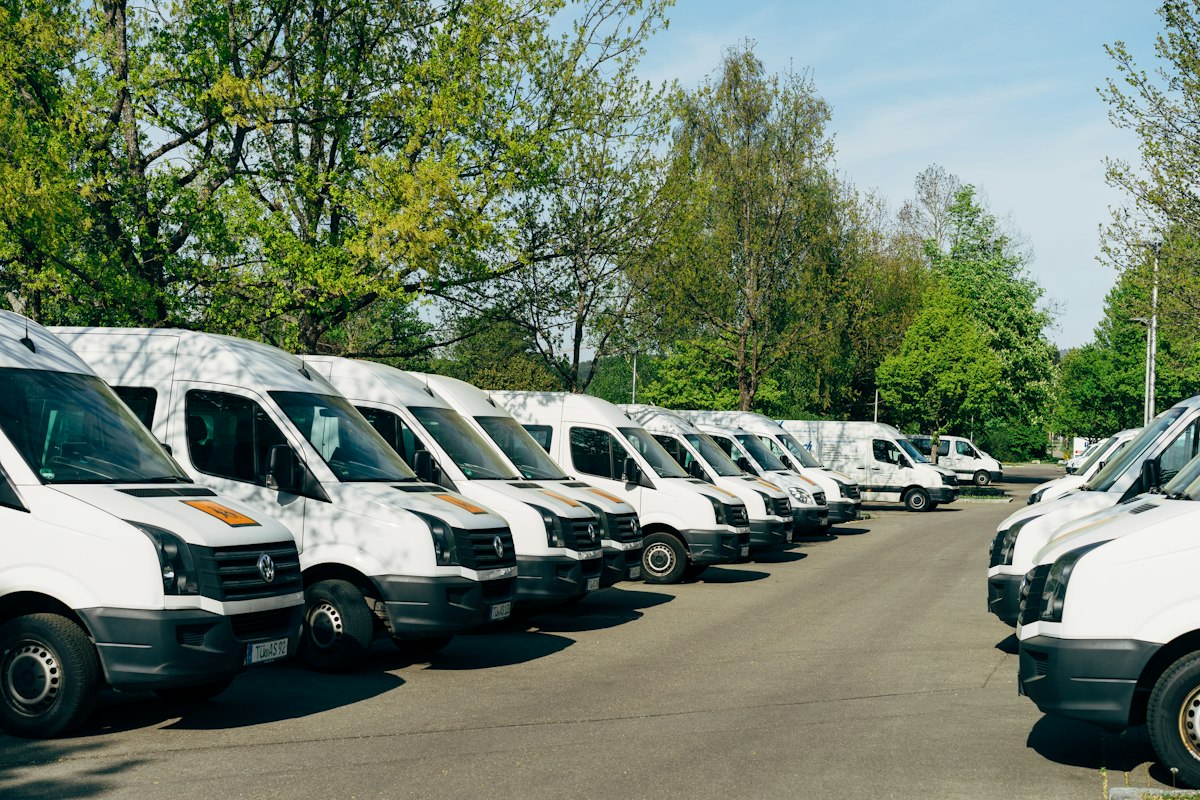
According to the Insurance Research Council, roughly one in six Colorado drivers is uninsured, and Colorado has the highest rate of underinsured drivers in the country. Put another way, a lot of the people sharing I-25 and Powers with your work trucks carry no insurance at all or nowhere near enough. That's a tough environment to put company vehicles in, and it's one of the biggest reasons commercial auto insurance in Colorado Springs deserves more attention than it usually gets.
It's also year-end review season, when a lot of business owners are looking at renewals and wondering whether their setup still fits. If you've got vehicles doing work, whether that's a roofer hauling ladders to a job site or a sales rep running between client meetings across El Paso County, here's how to tell whether a personal policy is enough, what a commercial policy actually covers, and where the gaps usually show up.
Personal auto policies are built for personal use: commuting, errands, road trips. Some carriers will still write a personally owned car or pickup that gets occasional business use, as long as it's rated for that use and the carrier knows about it. The trouble starts when the vehicle and how it's used look more like a business operation than a personal one.
A few situations almost always push you into commercial auto. The vehicle is titled to your business. If the title says LLC or Inc., personal carriers generally won't write it. Employees drive it. Once someone on your payroll is behind the wheel, you need a policy built around business drivers. It's a work truck doing work. Hauling materials and equipment, pulling trailers, running an upfitted service body, or making deliveries are commercial exposures. Your contracts require it. General contractors and property managers often require liability limits and additional insured status that a personal policy can't provide.
Where people get burned is the gray area. If a carrier finds out after an accident that a personally insured truck was being used in a way it wasn't rated for, the claim can get complicated fast, and you could end up covering medical bills, vehicle damage, or a lawsuit yourself. The fix is simple: tell your agent exactly how the vehicle gets used and who drives it, and let them put it on the right policy.
A commercial auto policy covers liability if you or an employee cause an accident while driving for work, plus physical damage to your own vehicles through comprehensive and collision coverage. Given Colorado's uninsured and underinsured numbers, uninsured and underinsured motorist coverage deserves real attention too. If one of your trucks gets hit by a driver carrying state minimum limits, or no coverage at all, this is the coverage that steps in for the injuries.
One piece most business owners miss is hired and non-owned auto coverage, often shortened to HNOA. If an employee uses their own car to run to the supply house or drive to a client meeting and causes an accident, the injured party can come after your business. HNOA protects the business from that liability. It doesn't pay to fix the employee's car, and their personal policy still responds first on their own vehicle, so it's worth making sure anyone who drives for you carries solid limits too.
Tools and equipment in the truck bed or on a job trailer usually aren't covered by the auto policy. That falls under contractor's equipment coverage, which we broke down in our post on contractor equipment insurance.
Injuries to your own employees on the job, including while they're driving for you, are a workers' compensation matter. We covered that in our post on workers' compensation in Colorado Springs. Commercial auto handles the vehicle side of your risk, and it works best when it's reviewed alongside the rest of your business coverage.
Every business owner wants a number, but commercial auto premiums vary too much from one operation to the next for a ballpark to be useful. What drives the price is pretty consistent, though: the driving records of everyone behind the wheel, where the vehicles are garaged overnight, how many miles they put on, how each vehicle is classified (service truck, delivery, or sales), the liability limits you carry, and your claims history.
Driver records deserve special attention. One driver with a couple of tickets or an at-fault accident can move the premium for the whole policy, so check motor vehicle records before you hire someone who'll be driving a company vehicle.
Start with your limits. If you work with general contractors or property managers, check your contracts for required liability limits and additional insured wording before you renew, because showing up with the wrong limits can cost you the job. The state minimum is rarely enough for a business with assets to protect.
Don't trim uninsured and underinsured motorist coverage to save a few dollars a month, especially in a state with these numbers. If anyone ever drives a personal vehicle for company business, even occasionally, ask about HNOA. And if you've added vehicles or drivers since your last renewal, make sure the policy reflects it.
This is also where an independent agent earns their keep. Commercial auto appetite varies a lot from carrier to carrier, and a company that's a great fit for a delivery fleet may not want a contractor working the Pikes Peak region. As a local agency, we have a deep understanding of Colorado and its unique areas and their specific insurance requirements. We've been a family insurance business for three generations, and you can see more of what we cover for business owners on our business insurance page.
Q: I only use my truck for work occasionally. Do I need commercial auto insurance?
It depends on how the truck is titled, who drives it, and what it's hauling. A personally owned pickup with light, occasional business use can sometimes stay on a personal policy if it's rated correctly. A truck titled to your business, driven by employees, or regularly hauling materials and equipment usually belongs on a commercial policy. Tell your agent exactly how you use it so it ends up on the right one.
Q: Does commercial auto insurance cover the tools and equipment in my truck?
Usually not. Tools and equipment are typically covered under contractor's equipment coverage, an inland marine policy built for property that moves from job to job. If you carry expensive equipment every day, review both policies together so nothing falls through the cracks.
Q: My vehicle is titled to my LLC. Can it stay on my personal auto policy?
Generally no. Most personal auto carriers won't write a vehicle titled to a business entity, and the named insured on the policy should match the name on the title. If you're moving a vehicle into your LLC or buying one in the company's name, call your agent before the title changes so the coverage moves with it.
If you're running vehicles for business anywhere in Colorado Springs or along the Front Range and you're not sure your current setup actually protects you, it's worth a short conversation before something happens on the road.
Give us a call or start a quote online, and we'll walk through exactly where you stand.