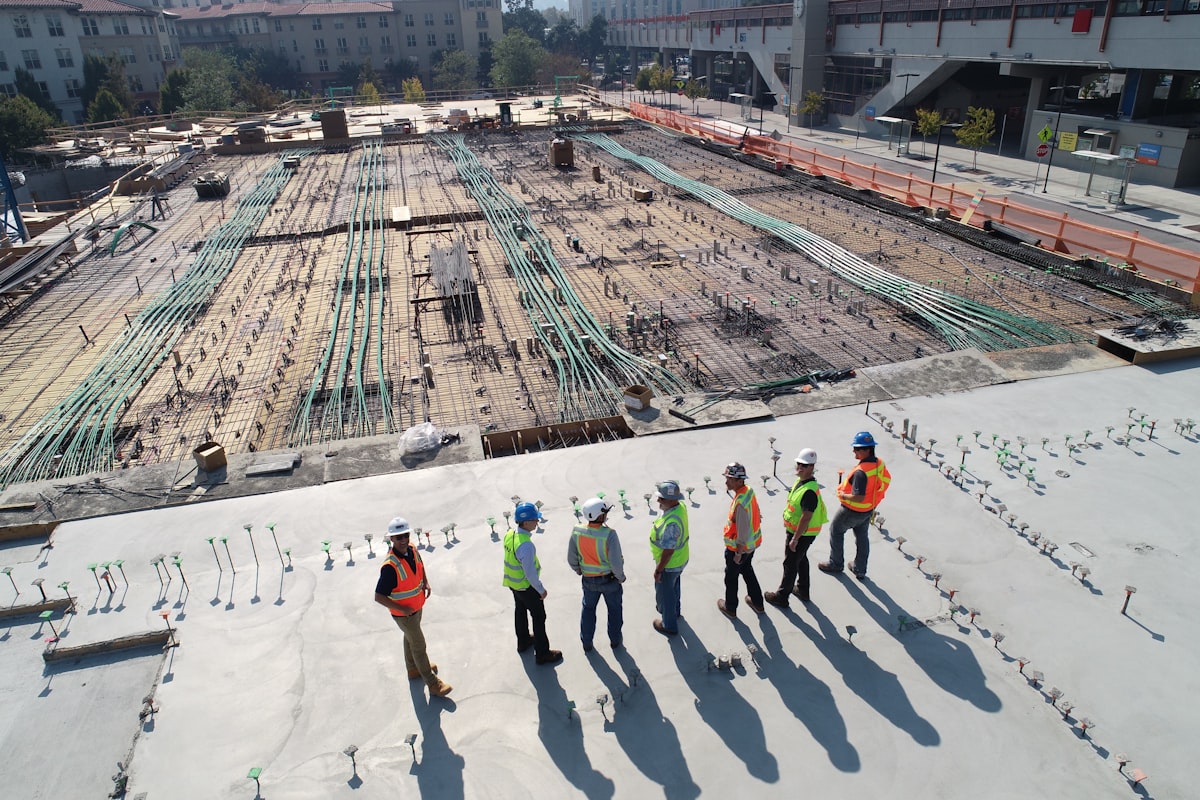
The Pikes Peak region saw commercial building permits surge 31% in 2025, the highest volume since 2022, and that momentum hasn't slowed down heading into summer 2026. Apartment complexes, commercial developments, and new single-family subdivisions are going up across El Paso County, and most of the contractors and developers behind those projects are carrying at least some exposure they're not thinking about. Builder's risk insurance in Colorado is one of the most consistently misunderstood coverage types in construction, and it's also one of the most important. If you have a project underway or one starting soon, here's what you need to know about how it works and where contractors and owners get tripped up.
Builder's risk is a temporary property insurance policy that covers a structure while it's under construction. Think of it as a bridge between no coverage and the permanent property policy that kicks in once the building is finished and occupied. While a project is in progress, your standard commercial property policy won't cover it. The building isn't done yet, and most carriers won't write property coverage on an incomplete structure. Builder's risk fills that gap.
The policy covers the structure itself, materials stored on-site, and in many cases materials in transit to the job. The covered perils typically include fire, wind, hail, lightning, vandalism, and theft. In Colorado, hail and wind are especially relevant since Front Range weather can do serious damage to a half-finished building just as fast as it can to a completed one. A storm rolling through Colorado Springs in May or June doesn't care whether your framing is up and your windows are in yet.
Coverage starts when materials first arrive on-site and runs until the project reaches substantial completion, meaning the structure is finished and ready for occupancy or transfer. That end date matters, and it's one of the details that catches people off guard if they're not tracking their timeline closely.
This is the section most people skip, and it's where the real surprises happen. Builder's risk insurance in Colorado does not cover everything that can go wrong on a job site, and knowing the exclusions is just as important as knowing what's included.
Contractor tools and equipment are typically excluded. If your crew's compressors, generators, or specialty tools get stolen off the site, your builder's risk policy likely won't respond. That's what inland marine or tools and equipment coverage is for, and it should be a separate line item in your insurance package if you have significant equipment on a job.
Employee injuries are not covered under builder's risk. Workers' compensation handles that, and in Colorado it's mandatory for any contractor with employees on payroll. The two policies operate independently, and one does not substitute for the other.
Faulty workmanship is almost universally excluded. If a subcontractor makes an error that has to be torn out and redone, the cost of that rework typically comes out of pocket. Builder's risk covers sudden, accidental physical loss to the structure, not the cost of correcting mistakes.
Contractor liability for property damage to third parties falls under your general liability policy, not builder's risk. If a crew member accidentally damages an adjacent property during construction, that's a GL claim, not a builder's risk claim. Understanding which policy responds to which type of loss saves a lot of confusion when something actually happens.
Premiums for builder's risk insurance in Colorado are calculated as a percentage of the total completed value of the project, meaning the value of the structure once it's finished, not just the cost of materials on-site at any given point. The rate typically ranges from 0.5% to 1.5% of that value depending on the project type, construction materials, location, and the coverage options selected.
For a $500,000 commercial build in the Colorado Springs area, you're typically looking at somewhere between $2,500 and $7,500 for the policy duration. That number moves based on factors like the project timeline, whether you're building with wood frame or steel, and how the carrier views the risk profile of your specific site and location within El Paso County.
The Front Range construction market has attracted more carrier attention in recent years, partly because of the hail exposure and partly because of the sheer volume of active projects. That's not necessarily a bad thing for buyers, since more carrier interest generally means more competition and more options. But it does mean underwriting has gotten more specific, and carriers want real project details before quoting. Ballpark numbers without a proper submission won't get you a real policy.
The short answer is anyone with a financial stake in an active construction project. That includes property owners, general contractors, developers, and lenders. Who actually purchases the policy can vary by project and by contract, which is one of the reasons builder's risk coverage generates more confusion than almost any other commercial line.
On most projects, either the property owner or the general contractor purchases the policy. The contract between them should specify which party is responsible for obtaining coverage, and it should also specify what the policy needs to include. If this isn't addressed in the contract upfront, you end up in a situation where both parties assume the other one handled it, and nobody actually did.
Lenders are also frequently in the picture. If a bank or private lender is financing a construction project in Colorado, they will almost always require builder's risk coverage as a condition of the loan. The lender is named as an additional interest on the policy, which means they have a protected position in any claim payment. That requirement is non-negotiable, so if you're entering a construction loan, get the coverage locked in before you need to show it to underwriting.
Policy terms vary a lot across carriers, and builder's risk is one of those coverage types where the details in the policy language matter more than the premium. A few things worth paying close attention to when you're reviewing options.
First, confirm the policy covers Colorado's specific weather exposures: hail, wind, and for some areas near waterways, flood. Some standard builder's risk forms exclude certain weather perils or apply separate deductibles to them. Given Colorado's climate, a hail exclusion on a builder's risk policy is a significant gap.
Second, check the coverage for soft costs. Some builder's risk policies can be extended to cover costs like architect fees, permits, and loan interest that accumulate if a covered loss delays the project. That extended coverage isn't automatic, but it's worth including on larger projects where a construction delay would have real financial consequences beyond just the cost to repair the damaged structure.
Third, understand what happens if the project runs long. Builder's risk policies are written for a specific project duration, and if your build takes longer than anticipated, the policy needs to be extended before it expires. Letting a builder's risk policy lapse mid-project means you're sitting on an uncovered structure until the extension is bound. It sounds obvious, but project delays are extremely common, and coverage lapses happen more than they should.
An independent insurance agent who works in the Colorado construction market can help you match the right carrier to the right project and make sure the policy terms actually reflect the coverage you're counting on. As a local agency, we have a deep understanding of Colorado and its unique areas and their specific insurance requirements, and builder's risk is one of the coverage lines where that local knowledge makes a real difference in what you end up with.
Q: Is builder's risk insurance required by law in Colorado?
Not by state law in most cases, but it's frequently required by contract or by lenders. If you're financing a construction project, your lender will almost certainly require it. If you're the GC on a commercial project, your contract with the owner may specify it. Even when it's not required, the financial exposure on an active construction site is real enough that skipping it is a significant risk.
Q: Does builder's risk cover a renovation project, not just new construction?
Yes, many builder's risk policies cover renovation and remodeling projects in addition to ground-up construction. The coverage structure is similar, though underwriters will want to know the existing structure's value and condition in addition to the scope of the renovation. Renovation projects can actually be trickier to underwrite because you're dealing with an occupied or partially occupied building in some cases.
The construction activity happening across Colorado Springs and the Front Range right now is real, and it's generating a significant amount of active exposure that isn't always being managed as carefully as it should be. If you have a project underway or are about to break ground on one, it's worth a conversation to make sure the coverage is structured correctly from the start. Give us a call or start a quote online and we'll walk through what your specific project needs.